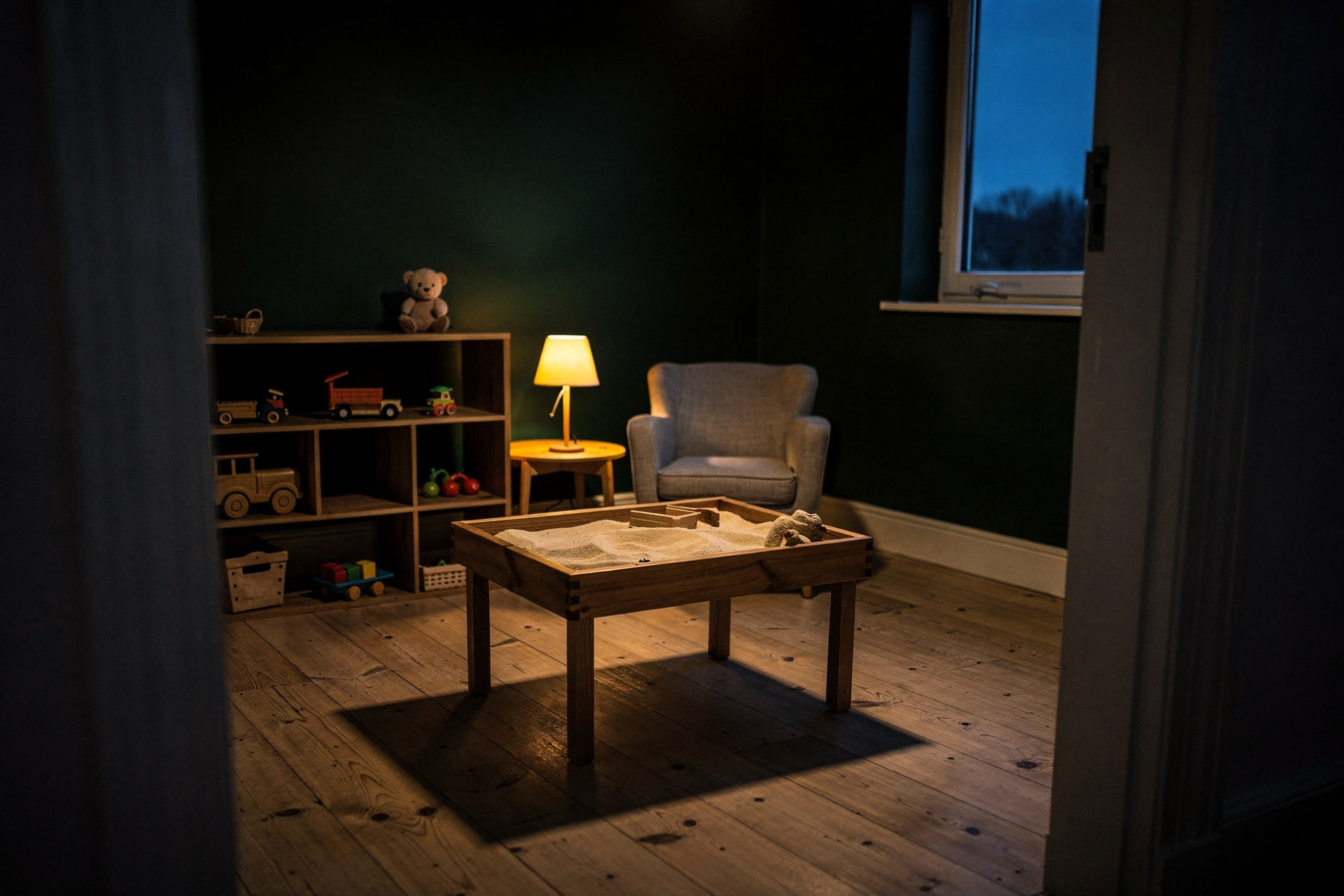
It is probably late in the evening right now
You are searching for a way to help your child. That means you already are.
My name is Daria. I am a child play specialist, and in a quiet playroom in Haarlem I help Russian-speaking children live through, in play, the things they don't yet have words for.
Book an intro meeting30 minutes, without your child, no commitment of any kindParents rarely come “just because.” More often, it is after an evening like this one.
Every family arrives with its own story, but some of those stories begin in very similar ways. Perhaps one of these is about your home.
- Meltdowns that won't end, no matter how long you hold and soothe
- Fears — of the dark, of daycare, of being without you even briefly
- A move to a new country, and your child seems like a different person
- A new baby, and suddenly so much anger you hardly recognise it
- Your child has gone quiet, answers “fine” and disappears into their room
- A divorce, a loss, an illness in the family that is hard to talk about
- The school or daycare keeps calling about behaviour
- Every evening is a battle: sleep, homework, “no” and “I won't”
If something here sounds like your evening, you don't need to diagnose it or explain it. Noticing it is enough.
Play is a child's native language. It is how they tell you what they cannot yet say.
An adult works through something hard by talking it out. A child works through it by playing it out. In play, children show their fears, their anger and their hopes long before they can name them.
I work with a method called child-centered play therapy. The child leads: they choose what to play and how, while I stay close — accepting, reflecting, and holding warm, clear boundaries. Inside that safety, children find their own way to what troubles them, and change grows from within, at their own pace, without pressure.
«Birds fly, fish swim, and children play.»
— Garry Landreth, founder of the method
Every child has their own pace, and that is normal. I don't promise quick miracles — I promise attentive, careful work.
A place where everything is always in its place
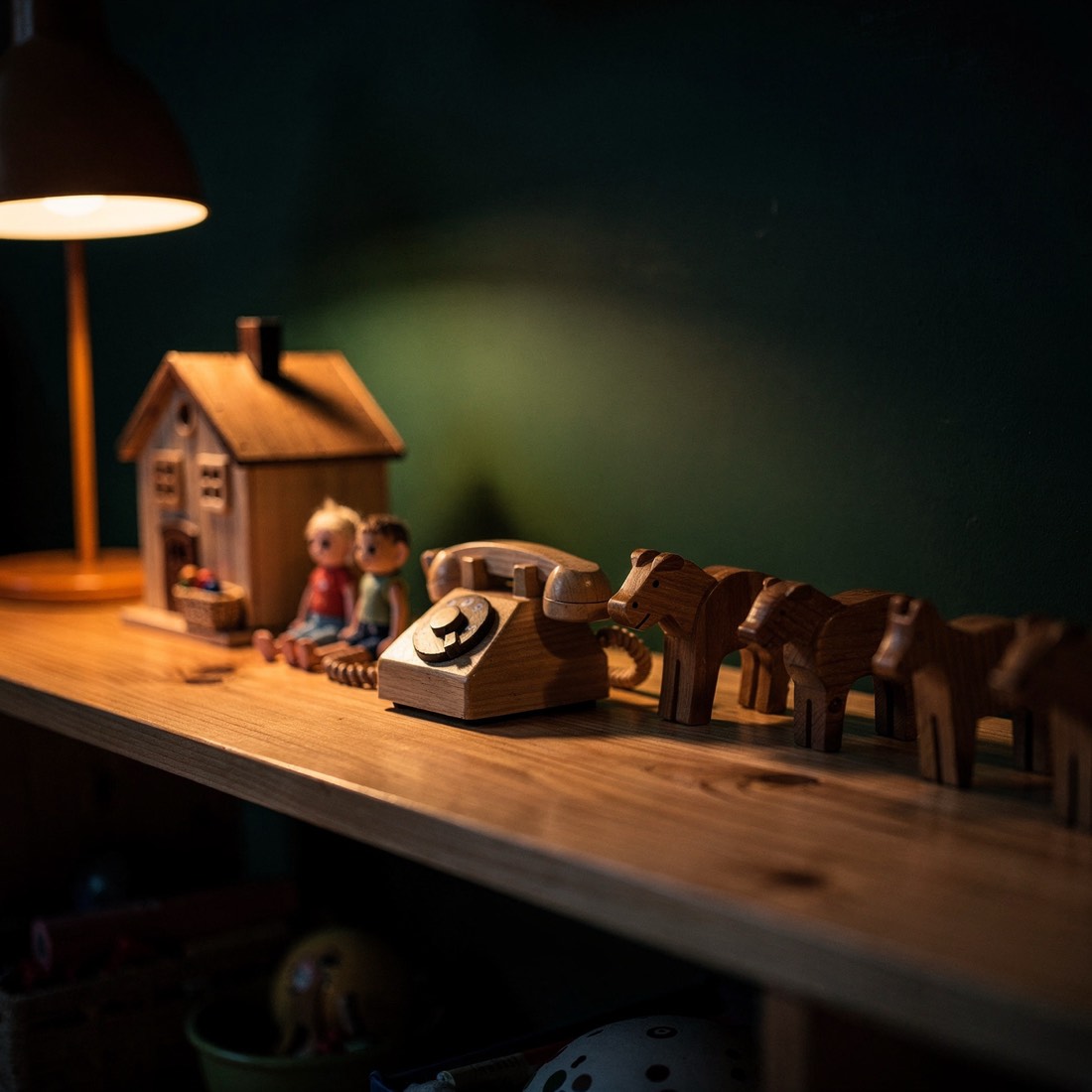
The playroom is arranged not for beauty but for a conversation without words. It holds everything a child might need to tell their story — and every week, each thing is waiting exactly where it was. For a child, that sameness is safety.
- toys from real life — a house, a family, dishes, a telephone
- a sand tray with miniatures — a whole world to build and rebuild
- paints, paper and art materials
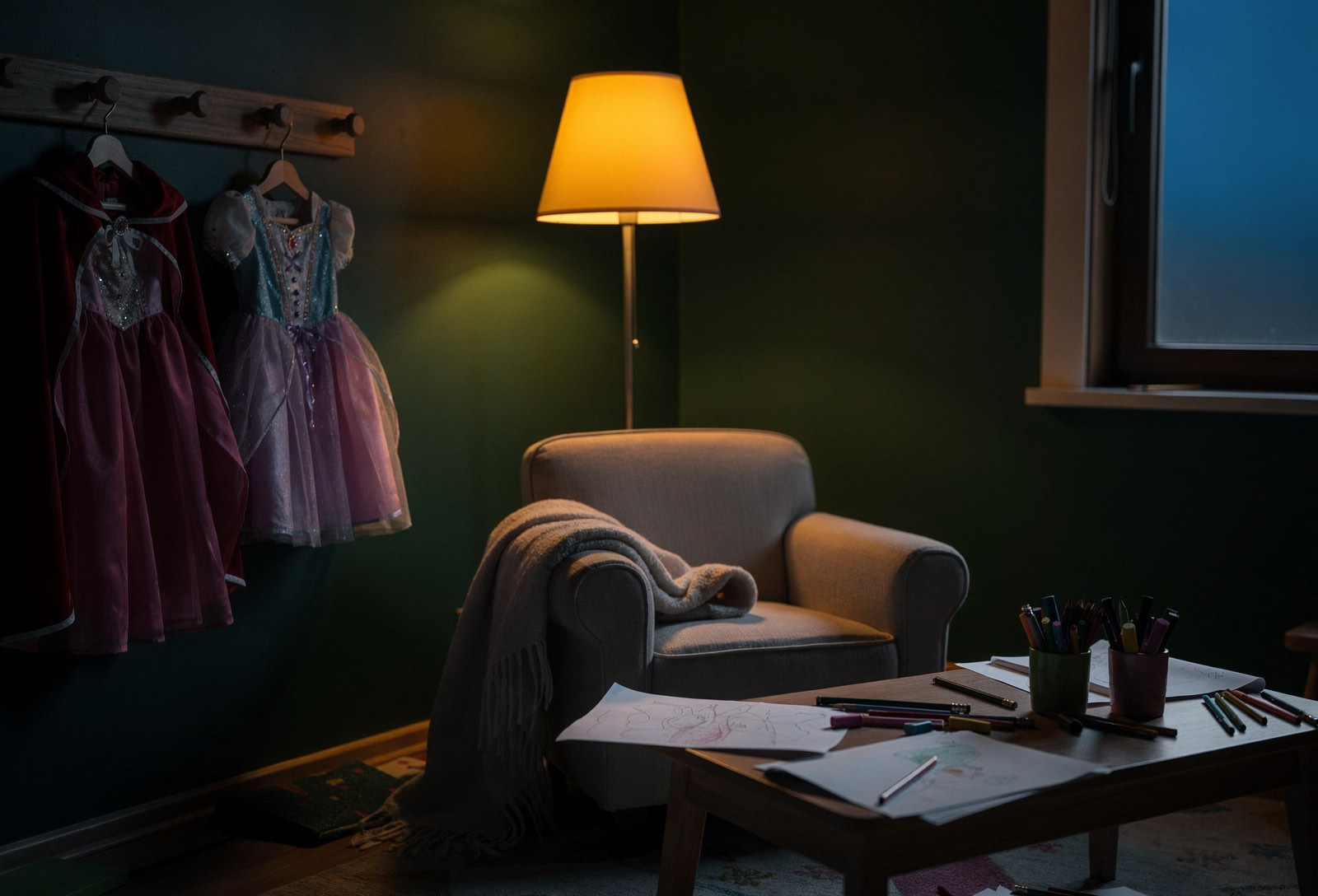
- costumes, for becoming someone else for a while
- materials for big feelings — things to squeeze, throw and conquer

A calm path, step by step
No sudden moves — not for you, and not for your child.
Intro meeting
Just the two of us — you and me. You tell me what is going on; I tell you honestly whether this method suits your child and how I can help. Afterwards, you decide in your own time whether to continue.
First play session
Your child meets the room and meets me. They don't have to explain anything or live up to anything — they can simply play.
Weekly sessions
Forty-five minutes of play, in Russian. The fixed time is part of the method: your child knows their hour is not going anywhere.
Parent meetings
We talk about what is changing — in the room and at home. You are never left in the dark, and your child keeps the privacy of their play.
Ending
We don't break off; we prepare the goodbye in advance, so the story has a calm and clear ending.
Daria
I am a Russian-speaking child play specialist. I live and work in Haarlem, and I see Russian-speaking families from across North Holland — children aged 3 to 12.
For a child who has recently moved countries, simply being able to play and be silent in Russian is already solid ground. I know what it is to make a home in a new country, and I don't hurry children or parents.
- Background in psychology
- Training in child-centered play therapy (CCPT)
- Regular supervision
- Sessions in Russian
Simple and predictable
- Format
- Individual sessions, 45 minutes, usually once a week
- Time
- A fixed day and hour — that place in the week belongs to your child
- Language
- Russian
- Ages
- Children from 3 to 12
- Where
- Haarlem, 15–20 minutes by train from Amsterdam. I share the exact address after booking
- Fee
- To be confirmed — I will tell you the current fee at the intro meeting
- Payment
- By bank transfer, invoiced
- Cancellation
- At least 24 hours ahead. Later cancellations are charged
The first step is a 30-minute intro meeting. It commits you to nothing.
Quiet answers
Are you a child therapist?
No, and it matters to say this plainly. In the Netherlands, “therapist” is a protected title, and I don't use it. I am a child play specialist; the method I work with is called child-centered play therapy.
Play sessions are not a medical service and do not replace a doctor or a psychotherapist. If your child needs medical care, I will be the first to say so.
My child would just be playing. How can that help?
Play is to a child what conversation is to an adult. In play, a child brings out what troubles them, lives through it in a safe form, and slowly reworks it. Fifty years of research on this method show that the “just playing” is the work.
How many sessions will we need?
Parents usually notice the first changes after a few weeks. Lasting results most often take 12–20 sessions. But every child has their own pace — at our parent meetings we will keep checking where things stand.
What should I tell my child before the first session?
Simple words are enough: “There is a room with lots of toys. You can play there however you like. Daria will be nearby.” Don't promise “it will be fun” and don't say they are going to be “fixed” — just a room, toys, and a grown-up close by.
Will you tell me what happens in the sessions?
I will tell you what matters: the themes that appear in the play, what is changing, and what you can do at home. But I won't retell sessions minute by minute — a child has a right to the privacy of their play, and their trust rests on that right.
The one exception is your child's safety. If it is ever at risk, I will of course speak with you.
We speak Russian at home and Dutch at school. Which language are the sessions in?
Russian. For many children growing up between two languages, playing in their home language is a relief in itself: nothing needs translating — not words, and not feelings.
What if my child doesn't want to go?
That happens, and it isn't a verdict. We never drag a child in: we will agree on a gentle way to introduce the room — and then the room usually does its own quiet work. Most children start looking forward to their hour.
What does it cost?
The fee is still being confirmed — I will tell you at the intro meeting, before you decide anything. Payment is by bank transfer, invoiced. Cancellation at least 24 hours ahead; later cancellations are charged.
What if the situation is urgent?
Play sessions are not emergency care. If anything threatens life or health, call 112 or contact your huisarts — now, without waiting.
You don't have to decide everything now
It is enough to book an intro meeting: thirty minutes of conversation, without your child, with no commitment. You tell me what is going on — I tell you how I can help. What happens next is up to you.